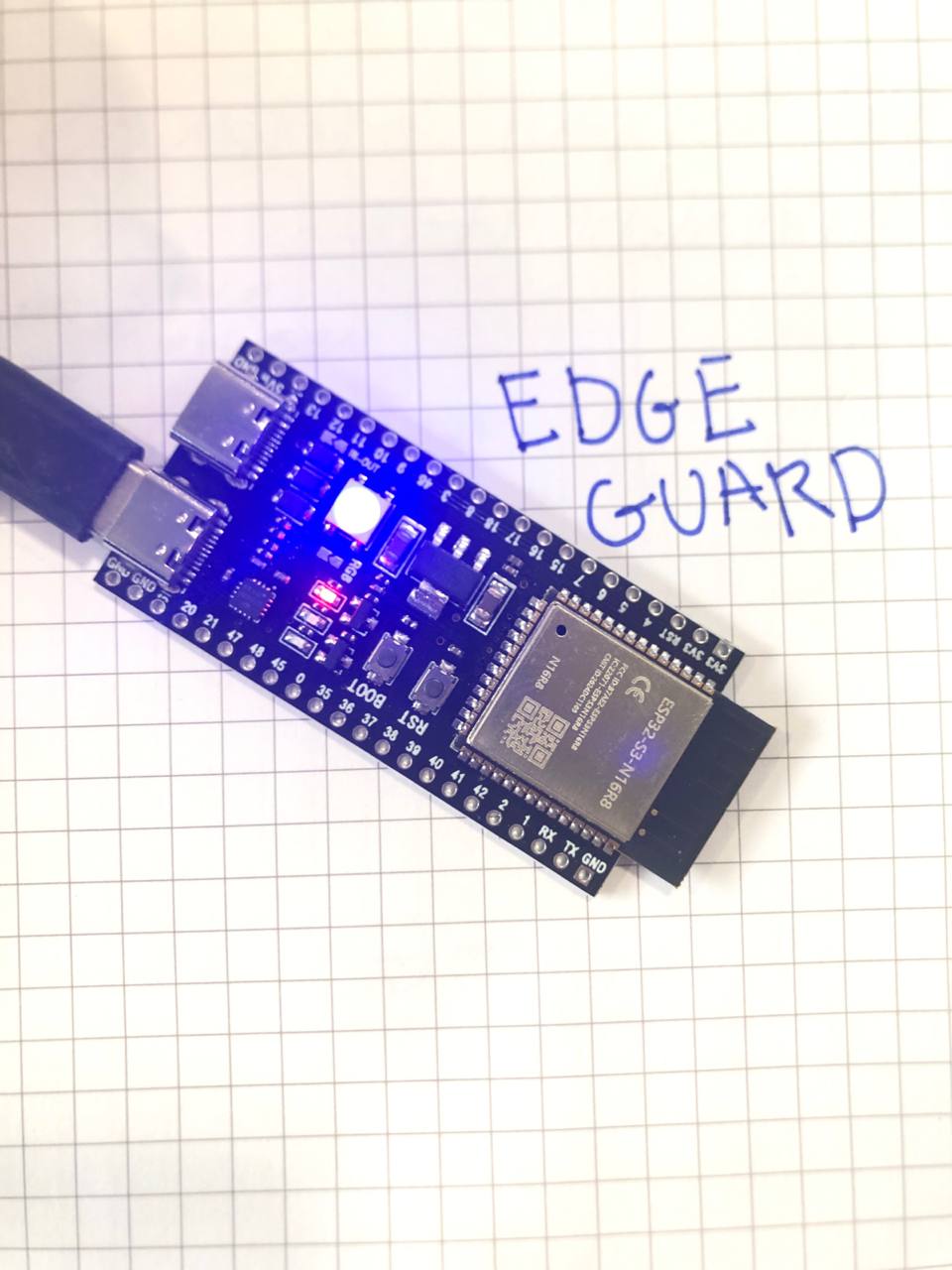
EdgeGuard is an embedded intrusion-detection system built around an ESP32-S3 camera device and a native FreeBSD backend. Its architecture is designed to run quantized INT8 person detection on-device, filter repeated detections locally, and transmit only relevant events and JPEG snapshots.
Architecture
The firmware separates capture, inference, security policy, and networking into dedicated FreeRTOS tasks. It uses a bounded, single-slot pipeline so slow inference discards stale frames instead of building an unbounded queue.
On the server side, the planned edgeguardd daemon authenticates devices, validates and stores events, writes to syslog, and sends image alerts through Telegram.
Current status
The ESP32-S3 bring-up milestone is complete, including serial diagnostics, FreeRTOS task setup, flash configuration, and successful initialization of the board’s 8 MB Octal PSRAM. Camera capture, inference, networking, and the server daemon remain active development milestones.
Engineering focus
- Explicit ownership of camera frame buffers
- Bounded inter-task communication
- Separation of time-sensitive capture from network operations
- Internal SRAM and external PSRAM measurement
- Native FreeBSD service development
- Device authentication and duplicate-event control